Carrying a 400-kilogram pillar by hand to the mountain top... The master carpenter who has been making torii gates for over 400 years at Fushimi Inari Taisha is truly amazing.
Continuing to rebuild for 400 years
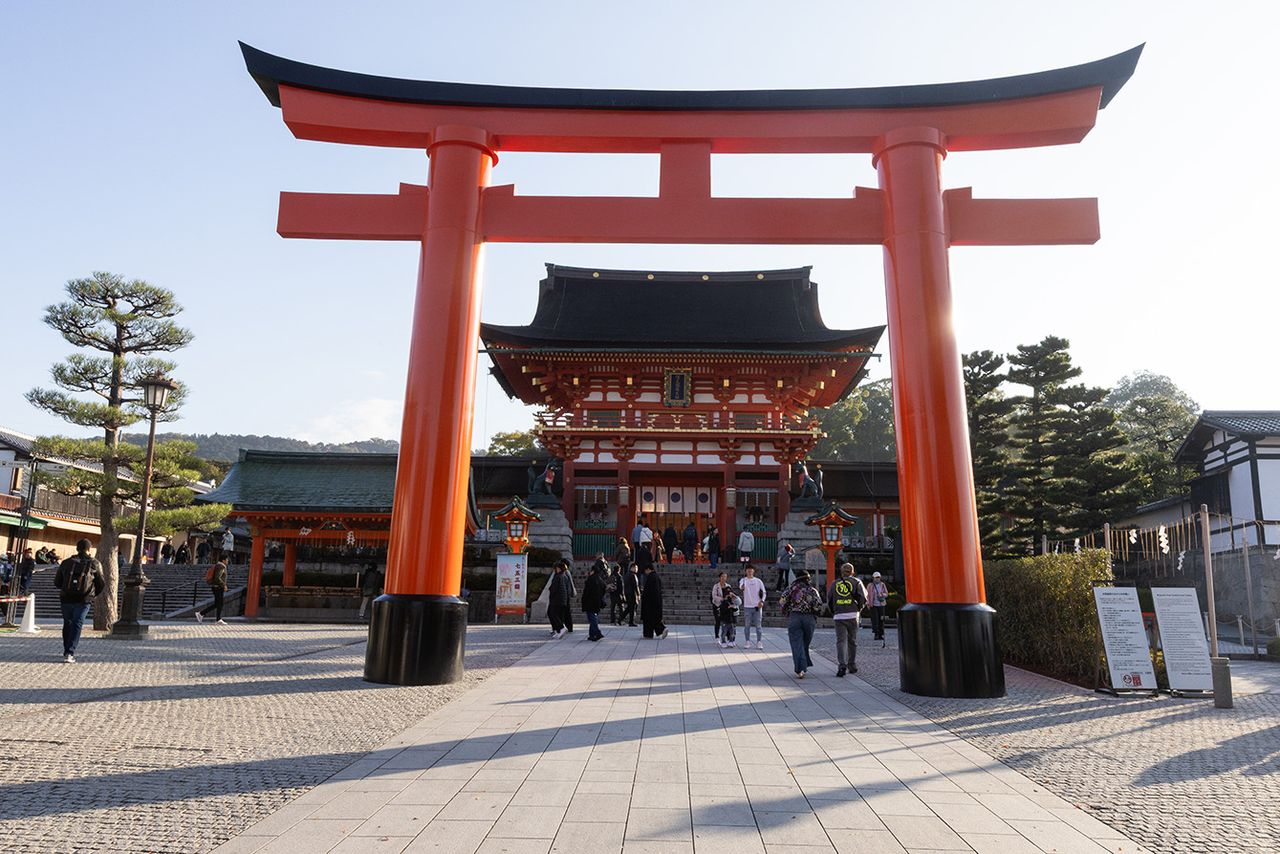
The Inari Taisha, the head shrine of the approximately 30,000 Inari shrines throughout Japan, enshrines Inari Okami, who is believed to bring prosperity in agriculture and business. Located in Fushimi-ku, Kyoto, the shrine's precincts are lined with more than 10,000 torii gates, which are dazzlingly bright and divine.
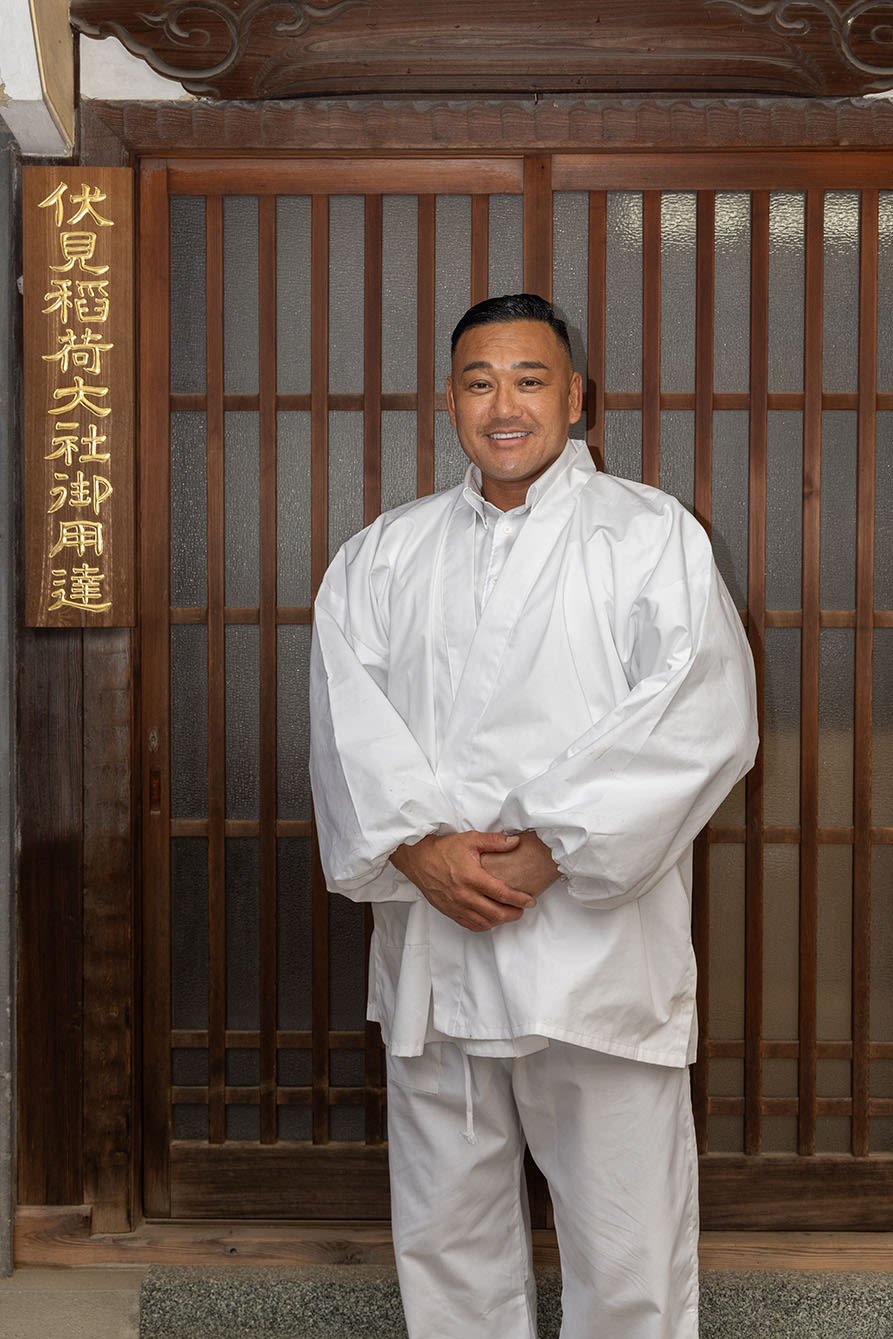
The "Hasegawa Kōmuten" company, which has been in business for over 400 years and is the official carpenter of the Fushimi Inari Taisha Shrine, handles most of the torii gates donated by people. The current head of the 26th generation, Mr. Minoru Hasegawa (45 years old), visits early every day or every other day to perform the ink filling of the characters on the torii gates.
Since many visitors come in the early morning, I start working with the headlights on around 4 a.m., when there are fewer people.
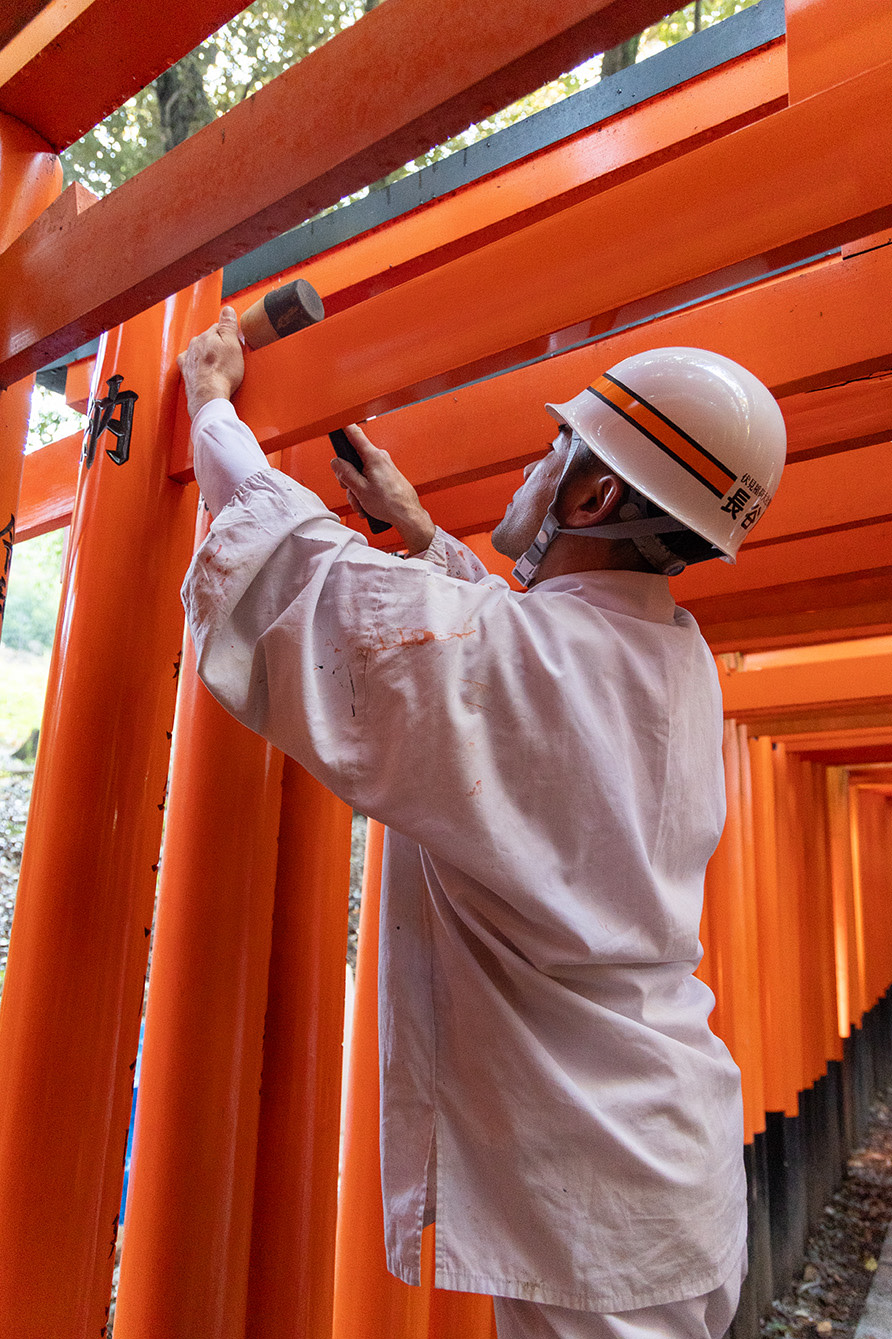
The components of the torii gate are made at the workshop of Hasegawa Kōmuten, located a few minutes' walk from the shrine path.
When the dried cedar wood, which is a sacred tree, arrives at the workshop as an octagonal column, the first step is to drill a hole for the beam that passes through the upper part of the torii.
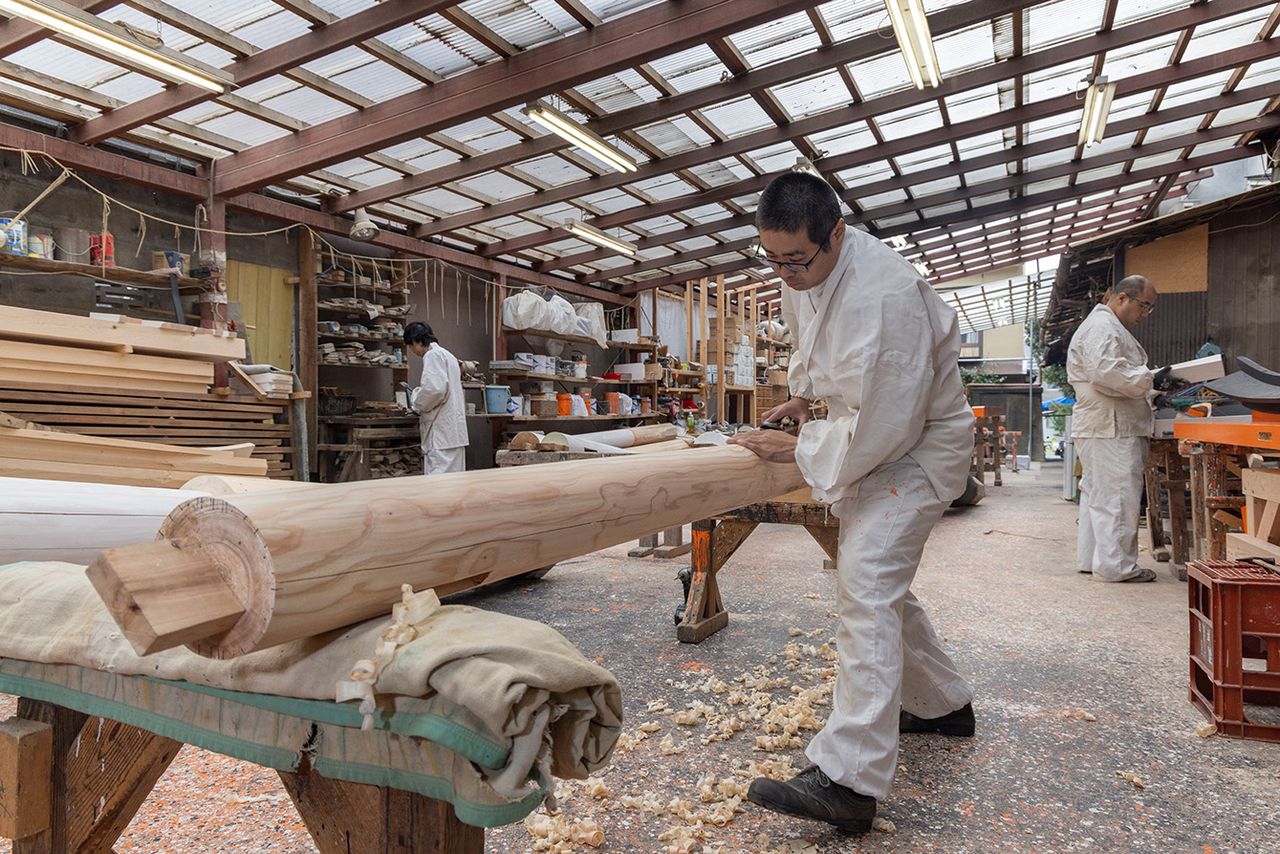
Next is the "cutting" process. Gradually remove the corners of the regular octagonal prism, and finally finish it into a round shape using a special plane. After that, the lower part to be buried in the ground is fired and carbonized to enhance its durability.
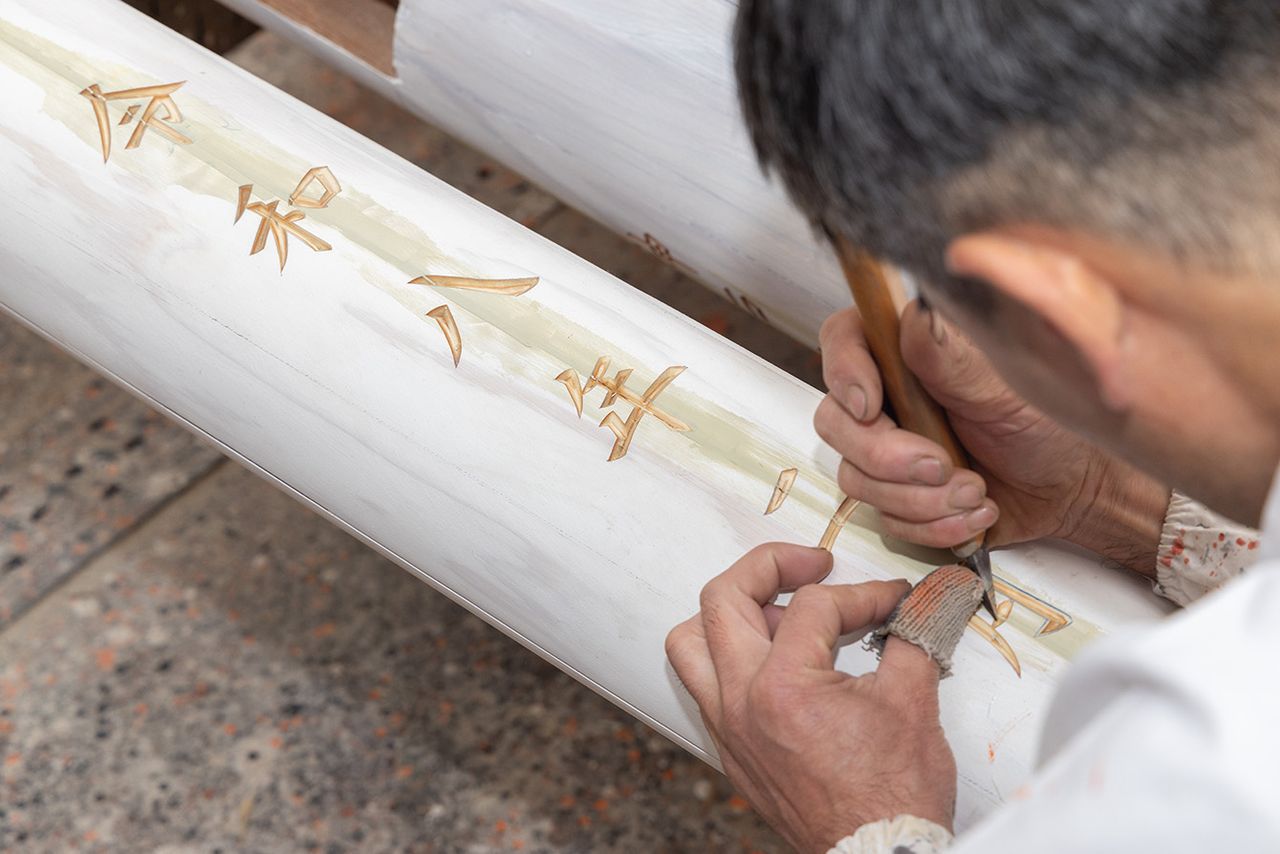
The work of carving characters into a pillar requires delicate techniques with a single sword.
The artisan's skill of carving the draft text with utmost precision is astonishing. Then, by applying red pigment four or five times, and once the character is inked, the column is completed.
Carrying a 400-kilogram pillar to the mountain top by human power
Fushimi Inari Taisha was established in 711 (the fourth year of Wado). The description of the thousand torii gates appeared only from the late Edo period onwards. The red torii gates are symbols of faith, and the culture of offering them as expressions of prayer and gratitude has continued until today.
"Materials are carried by hand up the mountain (Izumi Inari Shrine's mountain, called Inariyama), and then assembled on site. The size of torii gates is indicated by a number grade, with the smallest being 5-grade and the largest being 25-grade. A single pillar of a 5-grade torii weighs 50 kilograms, while one of a 10-grade torii can weigh up to 400 kilograms." (Mr. Hasegawa)
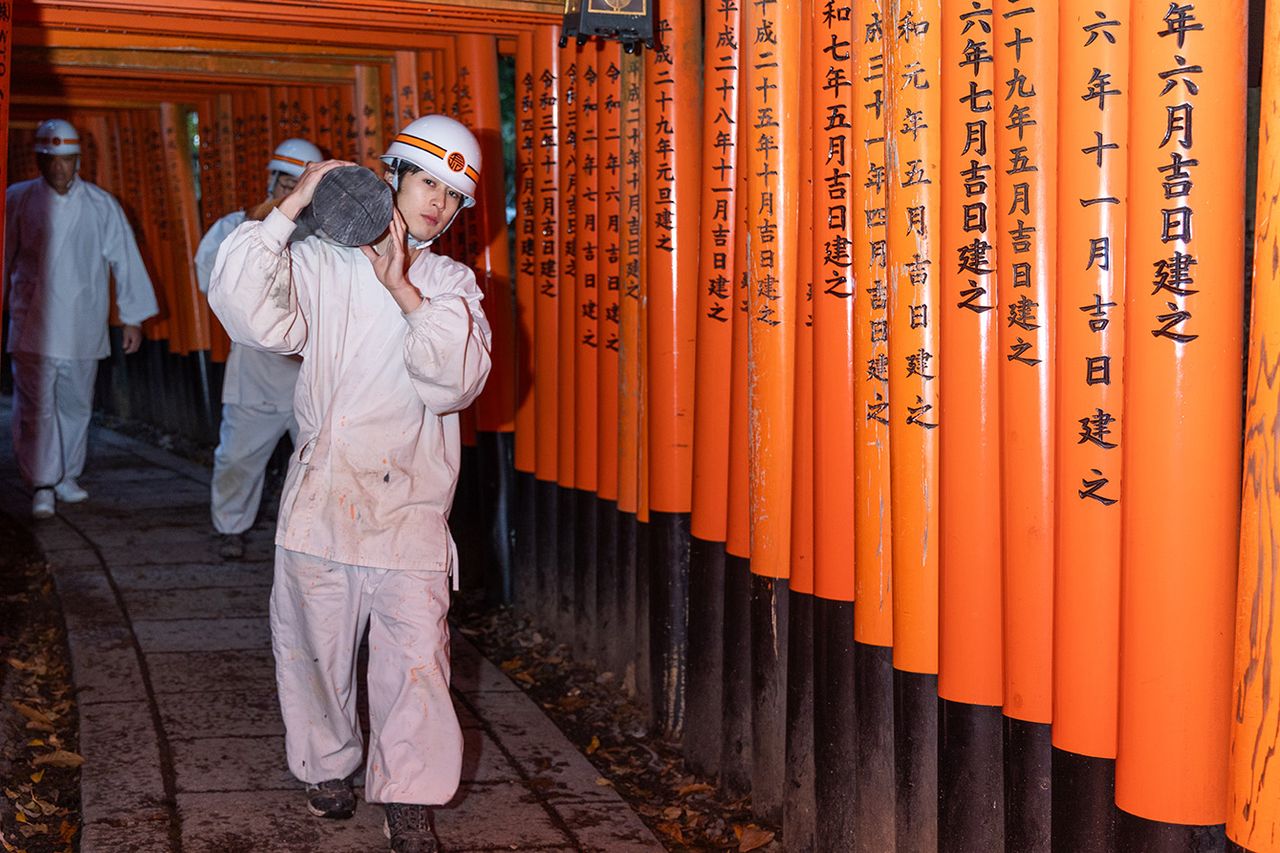
When rebuilding the No. 10 at the summit of Inariyama, it takes a one-way trip of 60 to 90 minutes just to carry one pillar, requiring 7 or 8 people. It is a two-day job to transport all the components and erect them.
In the case of the 5th torii, it decays in about 7 to 8 years. If the donor does not replace it, someone with a strong sense of commitment becomes a new donor. Even now, many donors-to-be line up in order.
Before Hasegawa changed, when he was a young 20-something, while working on rebuilding a torii gate, he was approached by a business owner living in Kanto, who said, "Someday I want to build a torii gate."
He is a person who comes frequently every month, and was very pleased when the torii was built. Later, I heard that after the torii was built, the company's performance improved, and now he has offered three torii.
It is the faith of these donors that is entrusted to the vermilion torii gates, supporting the mystical scenery of Fushimi Inari Taisha.
【Also read】"Will it become a Chinatown?" "It won't return to Japanese hands." ... The living conditions and anxieties of residents in the elite residential area "Kasai Rikurouso" where Chinese wealthy people have finally started to move in.
Post a Comment